Meme coin scrutiny explained as senators press the Treasury over Trump's token and what it means for traders
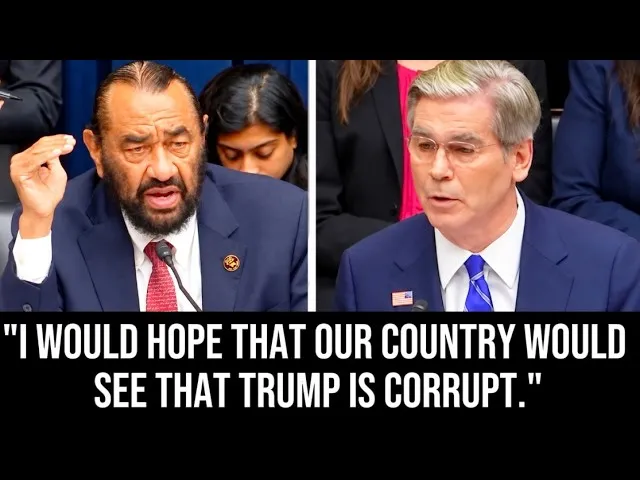
Video: WHOA: Al Green GRILLS Bessent over Trump's meme coin “scam”
You can order the same kind of articles for your own video to boost it on YouTube and Google. Just message the Telegram bot @sat_sit_bot. The bot writes and publishes the articles itself (with your YouTube video embedded) on popular topical websites (no ads). Your first 50 articles are free.
· based on the channel Daniel Reed
A meme coin is a crypto token with no cash flow, no claim on assets and no product behind it, whose price depends almost entirely on demand and attention, which is why the Senate exchange over Trump's token matters for anyone holding one. In the clip, Senator Al Green grills Treasury Secretary Scott Bessent over the president's meme coin, calling it a scam and asking what, if anything, the Treasury can do about it. The answer, essentially, is that the rules are still being written and no one has committed to an investigation.
What Al Green asked Scott Bessent about the Trump meme coin
The core of the exchange is a jurisdictional question: does the Treasury have any power to investigate or regulate a token launched by a sitting president? Green framed the token as a scam and pushed Bessent to say whether his department would look into it. Bessent's responses stayed general, pointing to ongoing work on digital asset policy rather than to any specific probe. The moment is worth watching in full because the evasions are the story: a direct accusation, a request for action, and a non-answer about authority. For traders, the practical takeaway is that political meme coins currently sit in a regulatory gray zone where no agency has clearly claimed responsibility.
How political meme coins actually work
A political meme coin is a token whose value is tied to a politician's brand rather than to any business. The mechanics are simple and identical across launches:
- A token is created, usually on a low-fee chain, with a large share reserved for the issuer or an affiliated entity.
- It is promoted to an audience that already trusts the figure behind it, which supplies the first wave of buyers.
- Price rises only while new buyers keep arriving; there is no revenue, dividend or collateral underneath.
- Early holders can sell into that demand, which is where most of the money changes hands.
- When attention fades, liquidity thins and the remaining holders absorb the loss.
That structure is why critics reach for the words scam and Ponzi. A Ponzi scheme pays old investors with new money by design and by deception; a meme coin does something similar through market mechanics rather than a promise, which is a legal distinction with real consequences. Nothing in the token's code promises a return, so the disclosure obligations that protect buyers of securities often do not apply.
Why the Treasury's silence is the real signal
Bessent's refusal to commit to an investigation tells you more about the regulatory landscape than any statement he could have made. The Treasury oversees sanctions, tax compliance and financial stability, but token issuance sits across a patchwork of agencies, and none has issued clear guidance on tokens tied to public officials. The result is a gap: a president can launch an asset that thousands of retail buyers purchase, and the department most associated with financial oversight says the framework is still in progress.
For market participants, that gap cuts both ways. It means fewer disclosures and less protection, but also less certainty about what enforcement might arrive later. When rules land, they tend to land suddenly.
Typical doubts from traders watching this debate
Three questions come up repeatedly whenever this story circulates. First, whether buying a political token signals support or is simply a trade; in practice the two get mixed, and buyers often underestimate how much of the price is driven by access and publicity rather than conviction. Second, whether the whole asset class is a fraud; most meme coins are not legally frauds, but almost all are negative-sum once fees, spreads and insider allocations are counted. Third, whether a token tied to a public figure can be shut down; technically it usually cannot, because it lives on a decentralized network, which is precisely why the political pressure lands on exchanges and intermediaries instead.
A fourth doubt is about laundering and dirty money. Claims that meme coins exist mainly for illicit flows are overstated for the category as a whole, but thin liquidity and loosely verified buyers do make some launches attractive to people who want to move value quickly. That is a reason to check who is on the other side of a trade, not a reason to assume every buyer is corrupt.
What to check before buying any meme coin
Before putting money into any token, political or otherwise, run the same checklist professionals use:
- Read the token allocation: if the issuer and insiders hold a large share, they can sell into your demand.
- Check liquidity depth: a market that moves sharply on small orders will be hard to exit.
- Identify the unlock schedule: tokens that unlock soon tend to face selling pressure.
- Look for a real venue: listings on regulated exchanges imply more scrutiny than anonymous launchpads.
- Size the position as money you can lose entirely, because that is the realistic base case.
None of this makes a meme coin a sound investment; it only separates a transparent gamble from an opaque one. The numbers that matter are supply held by the team, the share of liquidity locked, and how much of the recent volume is genuine buying rather than wash trading.
Conclusion
The Senate exchange is a useful stress test of how political meme coins are governed, and the answer so far is that they mostly are not. Green's accusation and Bessent's evasions show a regulator unwilling to claim jurisdiction over an asset launched by the president himself. Traders should treat that as information: where oversight is absent, the burden of due diligence shifts entirely to the buyer. Daniel Reed's channel covers the full exchange and the surrounding political context, and it is worth watching for the tone as much as the substance.
Key takeaways
- Senator Al Green questioned Treasury Secretary Scott Bessent over Trump's meme coin, calling it a scam in a heated exchange.
- Green pressed on whether the Treasury has any authority to investigate or regulate presidential meme coins.
- Bessent did not commit to a specific investigation and stressed that digital asset rules are still being developed.
- Meme coins have no cash flow, no claim on assets and derive value almost entirely from demand and attention.
- The episode highlights a gap: a sitting president's token sits outside most existing disclosure requirements.
Questions & answers
Is Trump's meme coin a scam?
Legally, a meme coin is rarely a scam in the fraud sense, because it promises no return and sells no claim on assets. Critics call it one because the structure transfers money from late buyers to early holders, and because a sitting president's brand supplies the demand. Whether that crosses a legal line depends on disclosures and marketing claims, which is exactly what the Senate exchange pressed on.
Can the Treasury shut down a political meme coin?
Usually not directly. A token on a decentralized network keeps running regardless of what a government says. Regulators instead pressure exchanges, brokers and payment intermediaries, which is why listings and access points matter more than the token contract itself.
How is a meme coin different from a Ponzi scheme?
A Ponzi scheme pays earlier investors with later investors' money while promising returns, which makes the deception explicit. A meme coin has the same money flow in practice but makes no promise, so buyers are speculating on attention rather than trusting a stated yield. That distinction is why most meme coin losses never become criminal cases.
What should I check before buying a political token?
Look at how much supply the issuer and insiders hold, whether liquidity is locked, when remaining tokens unlock, and where the token is listed. If a small team holds a large share and liquidity is thin, exiting at a fair price will be difficult. Treat any amount you put in as money you can lose completely.
Source: WHOA: Al Green GRILLS Bessent over Trump's meme coin “scam” · Markdown version